Start with the ancient settlement
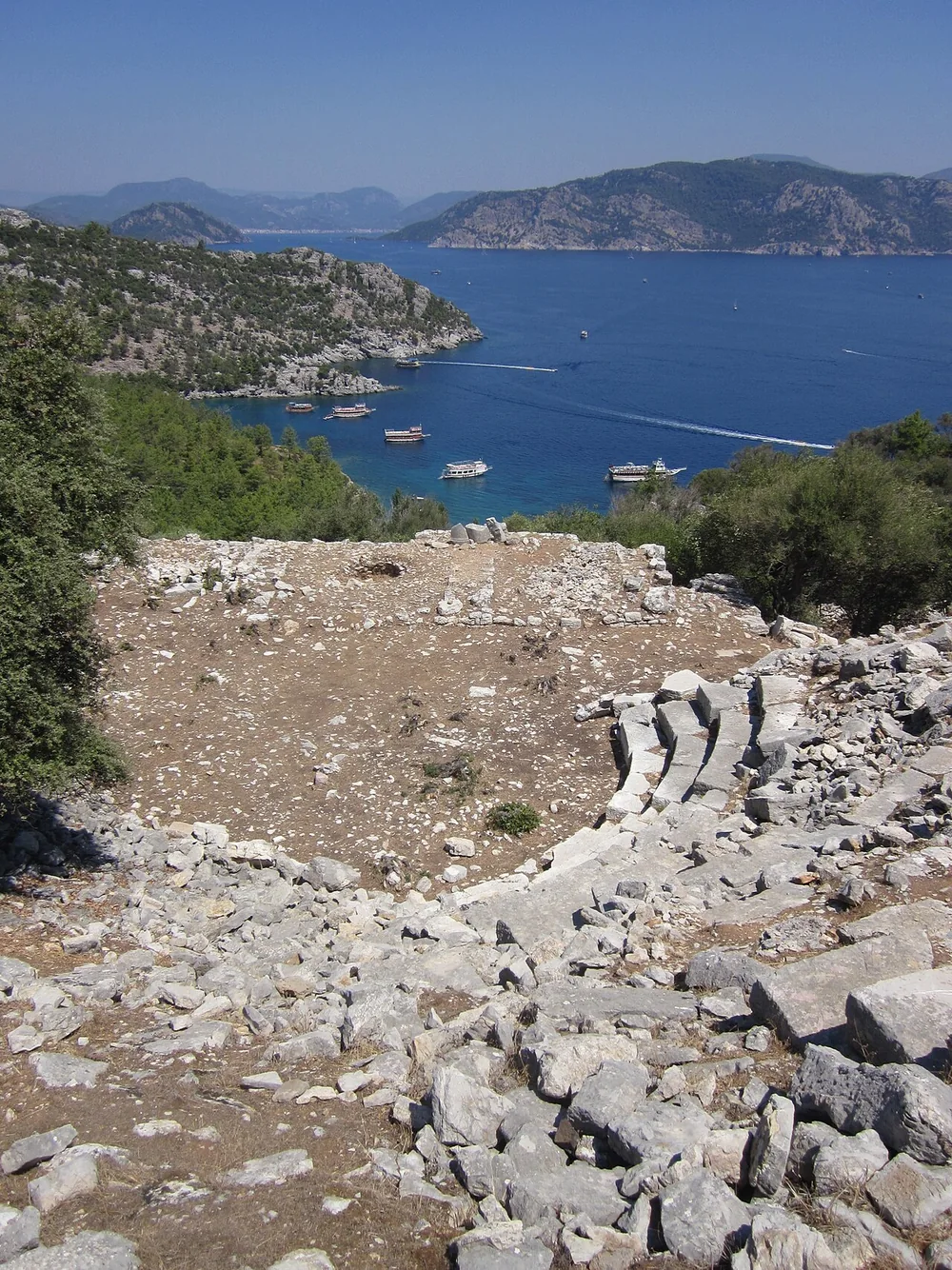
Amos combines archaeology with a coastal outing near Turunç. The hillside theatre, terraces and surviving walls reveal how a settlement used its view of the sea. Official excavation information includes evidence from periods earlier than Rome, so the site should not be described as exclusively Roman.
Begin the walk during a cooler part of the day, subject to current opening arrangements. Look at the relationship between the theatre, defensive walls and bay rather than climbing onto the ruins. Excavation barriers and staff directions take priority over paths shown on online maps.
Give the bay its own time
The hilltop and shoreline are two separate parts of the outing. Wear shoes with good grip for the archaeological area and carry swimming equipment separately. Ask about parking, beach access and services before heading down. A boat itinerary mentioning Amos may include a swimming stop without a landing or a walk to the ruins.
Choose one nearby extension
Combine the visit with Turunç or Kumlubük, leaving enough time for both walking and resting. Families can shorten the hillside section and carry water for the return. Read the historic sites guide for wider context, then verify current site access with the official museum or tourism authority.
Frequently asked questions
Is Amos entirely Roman?
No. Official excavation information also refers to earlier periods; its remains cannot be assigned to one period alone.
Does a boat stop include the archaeological site?
Not necessarily. Ask whether landing and the walk are included.
What can I combine with Amos?
Turunç or Kumlubük makes a useful additional stop. Allow separate time for the hill and the sea.